Winter vs all-weather tires for the Fraser Valley
Both are legal on BC winter routes. Which one makes sense depends on where you drive, not on the brochure.
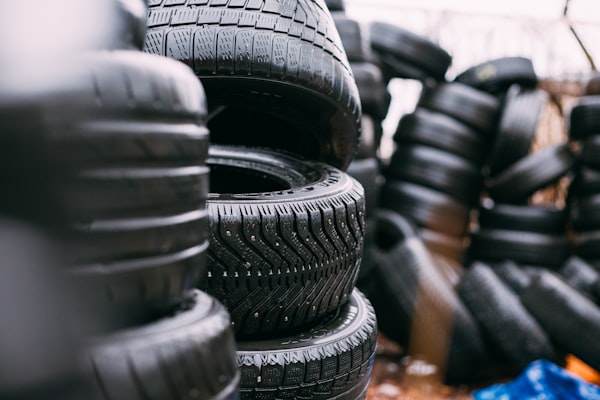
Winter tires grip best on snow and ice and are the right choice if you drive the Coquihalla, the Interior or hills in winter, but they come off in spring. All-weather tires carry the same mountain snowflake symbol, are legal on every BC winter route and stay on all year, trading some ice grip for no changeovers. For mostly-in-town Fraser Valley driving, all-weather tires usually make sense. All-season tires are a different thing again: they are rated for mild weather and are only the legal minimum when marked M+S.
In this article
Fraser Valley winters are mostly wet, with a few snow days and the odd icy morning, until you drive an hour east and climb the Coquihalla. That split is exactly why the choice between winter and all-weather tires is less obvious here than in the Interior. Here is how they compare.
Winter vs all-weather vs all-season at a glance
| All-season | All-weather | Winter | |
|---|---|---|---|
| Marking | Usually M+S | Mountain snowflake | Mountain snowflake |
| Legal on signed BC routes | Yes, as the minimum | Yes | Yes |
| Snow and ice grip | Weakest | Good | Best |
| Cold rain and slush | Fair | Good | Good |
| Hot summer roads | Good | Good | Wears fast |
| On the car all year? | Yes | Yes | No, swap in spring |
The BC government counts both mountain snowflake tires as winter tires and recommends them over M+S for cold-weather driving. It specifically lists all-weather tires among them.
When winter tires are the right call
A dedicated winter tire uses a softer rubber compound and a tread full of small slits (sipes) that bite into snow and ice. Below about 7°C it stays flexible where other tires stiffen up. Pick winter tires if:
- You drive the Coquihalla, Highway 3 or into the Interior between October and April, especially for work.
- You live up a hill or on a road that is slow to get plowed.
- You head to the mountains or the ski hill most weekends.
- You want the shortest stopping distance on ice you can buy.
The trade-off: they come off in spring, because a soft winter compound wears quickly on warm, dry roads. That means two changeovers a year. If the winter set is on its own rims, that is $60 for all four at our shop. If they need remounting each time, it is $40 per tire.
When all-weather tires make more sense
An all-weather tire is built to pass the same snow traction test as a winter tire while staying usable in summer. For a lot of Fraser Valley drivers, that is the better fit:
- You mostly drive Abbotsford, Langley, Chilliwack and Highway 1, and rarely leave the valley in winter.
- You make the odd Coquihalla trip and want to be legal without a second set.
- You would rather not book a changeover every spring and fall.
Where they fall short: on glare ice and deep, unplowed snow, a true winter tire still grips better. And because they stay on all year, they wear through every season instead of half of it.
Look for the 3-peaked mountain with a snowflake inside it. "All-season", "4 season" and "M+S" on their own do not mean the same thing. In our tire shop, all-weather tires with that symbol carry an All-Weather badge.
All-season vs all-weather tires: not the same
This is the mix-up we hear most. An all-season tire is a three-season tire: it handles rain and warm weather well, and most carry the M+S marking, which makes them legal on BC winter routes as a bare minimum. An all-weather tire has the mountain snowflake, so it has proven snow traction. If your all-seasons are your only tires and you drive the Coquihalla in winter, they are legal with 3.5 mm or more of tread, but they are not what the province recommends.
Cost: one set or two?
Prices from our shelf in October 2026, per tire, in common passenger sizes:
Running two sets is not twice the cost over time, because each set only wears for half the year. What a second set does add is the spring and fall changeover. One set of all-weather tires skips that, at the cost of some ice grip. If you are buying for a vehicle you plan to keep for years and you drive mountain roads, the winter set usually pays for itself in confidence alone. If you are a valley commuter, all-weather tires are the simpler answer.
So which should you buy?
- Coquihalla or Interior regularly, hills, early mornings: winter tires.
- Mostly in the valley, the odd mountain trip: all-weather tires.
- Only in town, never past Hope, and your all-seasons have plenty of tread: they are legal, but the first snow day in Abbotsford is when you will wish you had more.
For the full legal picture, dates and routes, read when you need winter tires in BC. To see both types in your size with today's prices, go to our winter tires page, or call (778) 666-6011 and we will often have them on the same day. Check road conditions on DriveBC before any winter highway trip.
- Winter and all-weather tires both carry the 3-peaked mountain and snowflake, so both are legal on signed BC routes.
- Winter tires win on ice, packed snow and mountain passes. All-weather tires win on convenience: one set, all year.
- All-season is not the same as all-weather. Most all-seasons only carry M+S, the bare legal minimum.
- In stock at Kingdom (October 2026): all-weather from $84.95 per tire, winter from $74.95 per tire.
- A dedicated winter set means a changeover twice a year: $60 for four if they are on their own rims.